


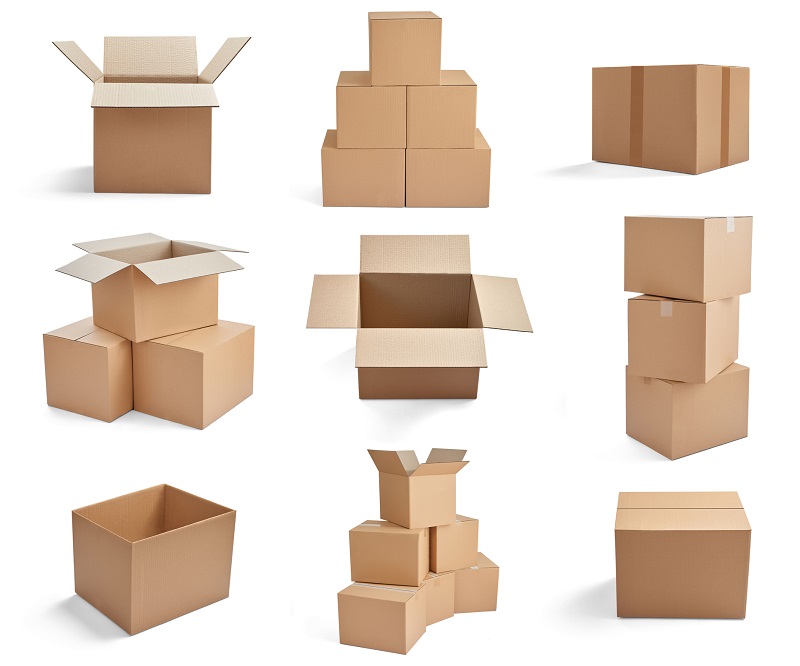
It is hard to find an industry that does not use cardboard boxes. Whether in a restaurant or factory, they are simply indispensable. The same is probably true for all of us in our everyday lives. Who has never had to pack a parcel properly? However, the familiar and trustworthy cardboard cuboid is not always enough. Many items require packaging with non-standard shapes – often a requirement not only for functionality, but also for aesthetics.
WHAT SHAPES CAN A CARDBOARD BOX TAKE?
Standard cardboard boxes are cuboid in shape and have no protrusions. Deviations from this standard are usually dictated by the concern for the best possible protection of goods that exceed the dimensions or shape of a standard box. These packages could be cylindrical, oval, round, tubes or cut at different angles.
Companies often opt for non-standard shaped boxes for aesthetic and image reasons – such a move can surprise the customer, may be more memorable, will stand out among other packaging and demonstrate the reliability and perfectionism of the brand.
HOW IS A CUSTOMISED BOX MADE?
The first stage in the creation of a customized cardboard box its design. At this stage a set of information regarding the customer’s expectations and the characteristics of the goods to be protected is necessary. Data such as the dimensions (length, width, height) of the packaging, the type of cardboard and the customer’s aesthetic expectations are essential. It is also helpful to determine the specific characteristics of the goods to be transported – their weight, shape, the logistical chain they have to follow. With this data, a construction grid is prepared, from which the first cardboard prototype is created. If the trial version meets the customer’s expectations, the stage of production follows.
The production of cardboard boxes starts with the manufacture of the most important element – the cardboard itself. The strength of the cardboard packaging and its resistance to damage such as dents or tears depends on this element – its type, construction and number of layers.
If the print is to be included on the cardboard, it is transported to the printing section. After a print quality check, the stage of machine cutting and die-cutting takes place. This is another very important stop for the materials – it is here that they are cut into the designed shapes. In the next stage grooves are made to assemble the box easier.
Once a sheet of cardboard has taken the required shape, it is subjected to cleaning – all superfluous elements generated in the product manufacturing process, i.e. process waste, are removed. Packaging blanks can already be extracted from each sheet.
The individual blanks are transferred to a gluing machine, where they are glued and bent. This process must be planned in such a way that the box can be easily folded and unfolded.
The final stage of production is quality control of the boxes. They are subjected to a series of tests to check their strength, dimensions and crush resistance.